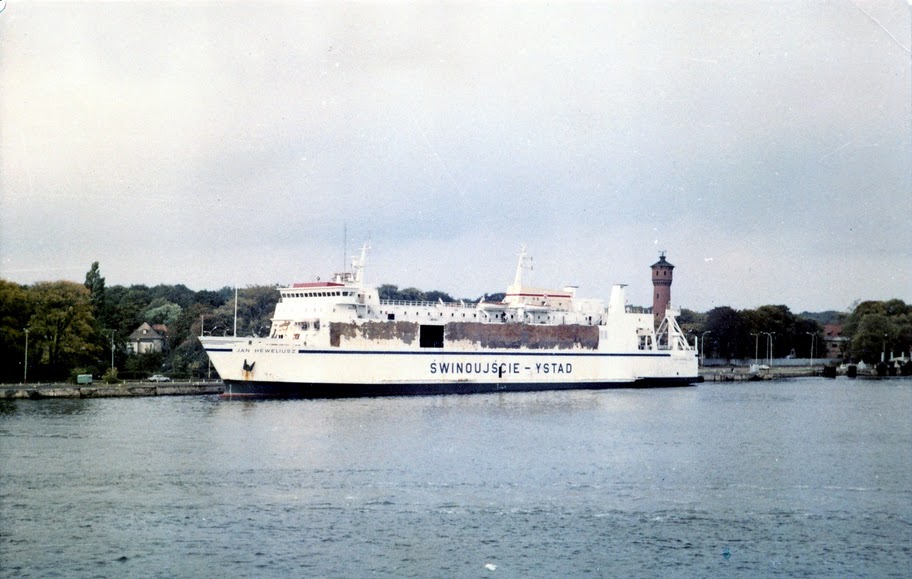
The ferry rolled onto her side. Cargo broke loose below Jerzy. Escape from the ship was only the beginning: a liferaft could keep a person afloat without keeping them alive.
Jerzy was 28. When the first alarm sounded, he had not yet understood how serious the danger was. Then came another heel to port, another alarm, and the struggle to get outside. Later, he remembered a tremendous crash from beneath the deck as vehicles and railway wagons shifted. The ferry was going over.1
It was the morning of 14 January 1993. The Polish ferry Jan Heweliusz was crossing from Świnoujście to Ystad. Before daylight, she would be upside down off the German island of Rügen. Only nine crew members would survive. None of the passengers would return.2
A ship carrying old warnings
Captain Andrzej had left Świnoujście at 11:35 the previous evening. A later maritime ruling, reproduced in the European human-rights judgment, said the ferry had sailed unseaworthy: her stern door was not properly watertight, accident-stability requirements were unmet, and vehicles were inadequately secured. The door had been damaged in Ystad four days earlier.3
Yet the familiar question—why sail into a hurricane?—can be misleading. In his archival investigation, the reporter Adam found that the departure forecast had not predicted the storm’s eventual violence. Other ferries were also at sea that night and survived. The weather mattered; so did the vessel that met it.4
The list that would not stop
The most likely sequence identified by the maritime appeals chamber combined uneven ballast, a turn into the wind, violent gusts and cargo moving towards the port side. Each additional weight on the low side made recovery harder.3
The ballast arrangements remain a disturbing part of the story. In a 2025 investigation, Polish Radio reported witness accounts that powered controls for ballast valves had been removed before the disaster. Sailors then had to operate valves manually below decks, separated from the bridge. The broadcaster also reported that the system, intended for loading operations in harbour, was used at sea. These are reported findings from later interviews; their precise contribution to the capsize remains disputed.5
As the ferry leaned, an ordinary escape route became a physical obstacle. Jerzy recalled being unable to get out of the superstructure unaided. The second officer ordered the liferafts opened. Then came the crashing cargo, and the ship rolled further. People pulled whoever they could into a raft.1
A distress message reached the sister ferry Mikołaj Kopernik: a list of around 30 degrees, an order to abandon ship. A later transmission reported 70 degrees. After that, calls asking for the ferry’s position brought no answer. Survivors said the final overturning was too fast to lower the lifeboats.6
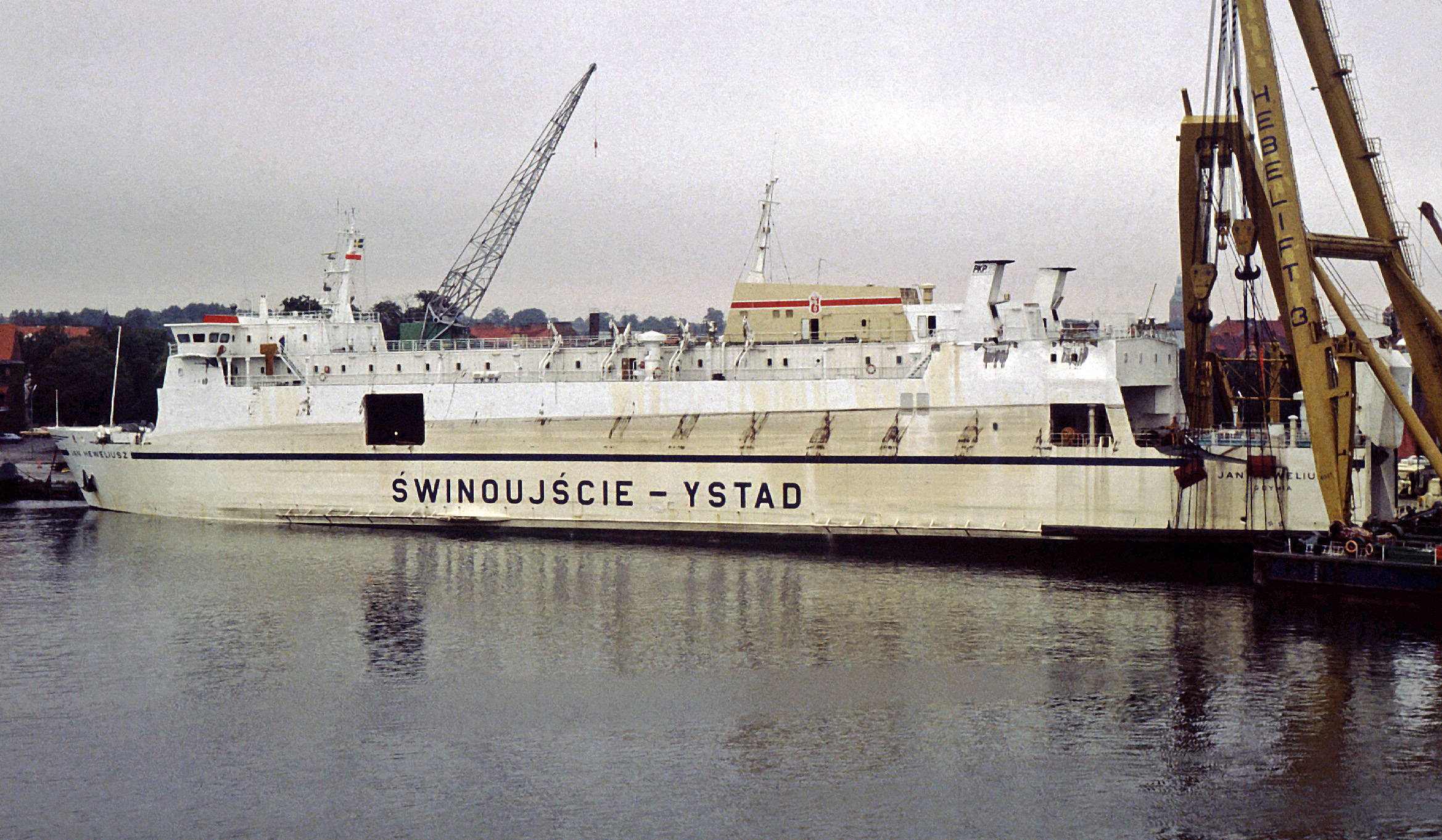
The rescue was there. Reaching it was another matter.
The German rescue cruisers Arkona and Hans Lüken headed out. The DGzRS rescue service describes searching in darkness and waves reaching eight metres. Eventually, Arkona found a liferaft carrying crew members, including Leszek and Grzegorz. Two men were rescued by the cruiser; a helicopter brought three others to safety.7
Finding a raft was not the same as completing a rescue. A small inflatable and a steel ship rose and fell differently. The sea could bring people close to rescuers, then wrench them away again.
Jerzy remembered seeing a rescue vessel after dawn. At moments, the men in the raft were almost face to face with the rescuers, yet transferring between them remained desperately difficult. Helicopters lifted people away in small numbers. His strength was failing as he waited. When he was finally winched aboard, he looked at his watch: 9:05. He had spent about four hours in the raft.1
The people who did not come home
Among the lost was Teresa, a stewardess. According to Adam’s research, her husband had already died of a heart attack aboard a ship in Rotterdam. She had gone to sea to support their children. The fatal crossing came during her first two-week duty period on Heweliusz. Her body was never recovered.4
For Jolanta and her daughter Agnieszka, the missing man was Andrzej: a husband and father who enjoyed making furniture in his workshop. A cupboard he built remained in the family home decades later. Agnieszka remembered a father who sang and skipped along the street without worrying what strangers thought.8
After his death, grief became a struggle over blame. Jolanta told Polish Radio that, during a visit to the shipping ministry, an official warned her that a scapegoat would be needed. That is her account of the encounter. She spent years defending her husband’s name.8
Concrete, secret cargo and the limits of certainty
One serious disputed issue concerns concrete added to a deck after the 1986 fire. Adam’s investigation raised the possibility that this worsened stability. Its exact role in the final loss should not be presented as settled.4
More dramatic theories describe hidden weapons, explosives or a deliberate sinking. They remain unproven. A wreck left underwater is not, by itself, evidence of concealment: Adam also identified the economics of recovery and scrapping as an explanation for leaving it there.4
There was, however, a proven failure in the legal aftermath. In 2005, the European Court of Human Rights found that the maritime chambers lacked the required independence and impartiality. That judgment concerned the fairness of the proceedings. It did not establish sabotage or determine the physical cause of the sinking.3
Grzegorz survived. Years later, he gave the National Maritime Museum his survival suit and a small leather pouch recovered by divers. Inside were everyday possessions: documents, a watch, a notebook. When museum staff examined the papers, sand from the seabed fell out.2
A man came home. Sand still came back from the place where the others had died.
If this story stayed with you, share it with someone who will remember the people behind it.
Cover photograph: Jan Heweliusz at Świnoujście, 10 October 1986, with fire damage visible. Balcer, Wikimedia Commons, CC BY 2.5. Unaltered photograph, displayed at reduced size.
Sources
- Jerzy’s survivor testimony, reported by WP from his Kanal Zero interview, 10 November 2025.
- National Maritime Museum: Grzegorz’s personal belongings and survival suit, 12 January 2023.
- European Court of Human Rights, application 54723/00, judgment of 3 March 2005, including extracts from the 1999 maritime ruling.
- PAP interview with Adam about his archival investigation, originally December 2024, republished 6 November 2025.
- Polish Radio: later witness accounts of ballast-valve controls, 13 November 2025.
- National Maritime Museum: distress messages and the final capsize, 14 January 2021.
- DGzRS: Mayday im Ostsee-Orkan, rescue-service account and documentary with rescuers and survivors, 2023.
- Polish Radio interviews with Jolanta and Agnieszka, 27 November 2025.


Leave a Reply