On a calm March evening, a ferry left Belgium for Dover. Minutes later, she lay on her side. Inside, passengers searched for a way out—and ordinary people became the only bridge between strangers and death.
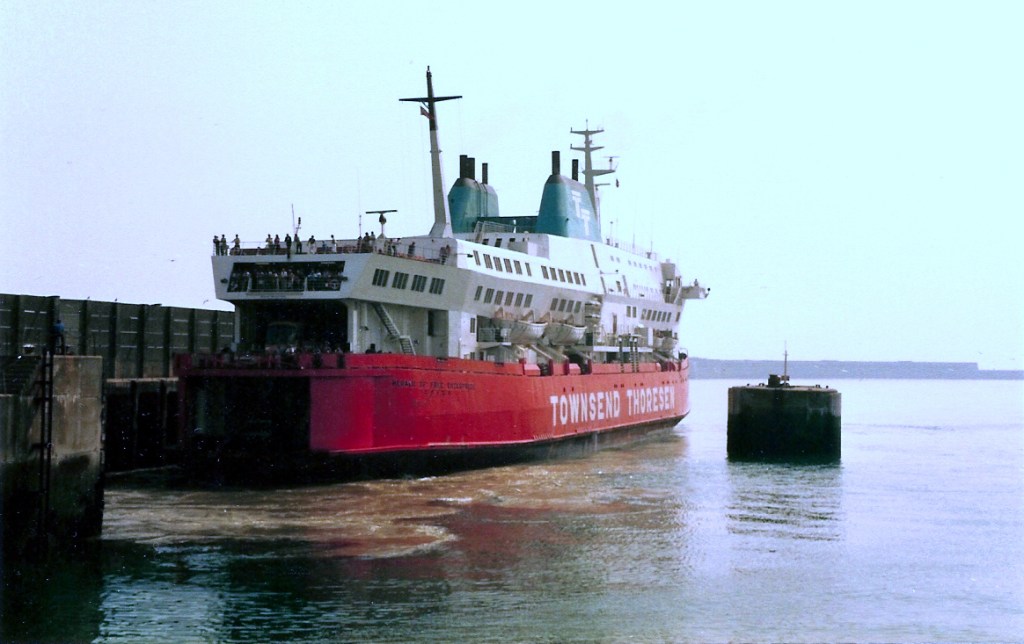
Cover photograph: Herald of Free Enterprise at Dover, 1984, before the disaster. Franz Golhen / Wikimedia Commons. Released into the public domain.
A Crossing Like Any Other
There was no great storm to remember.
On 6 March 1987, the sea outside Zeebrugge was almost calm. Herald of Free Enterprise carried approximately 459 passengers and 80 crew members towards Dover. Cars and freight vehicles stood on her decks. The harbour was still close.
A ferry crossing belongs to the ordinary parts of life: a ticket, a departure, a place to arrive. Its familiarity makes it easy to forget how much trust is involved. Every passenger steps aboard believing that someone has checked the things they cannot see.
On this voyage, the bow doors were still open.
When the Floor Became a Wall
As the ferry gathered speed, seawater poured onto the vehicle deck. Water could spread across that broad space, shifting as the vessel leaned and making the list worse. The ship lost her stability.
The capsize unfolded in roughly ninety seconds.
She fell onto her port side. The shallow seabed stopped her from disappearing completely, leaving part of the vessel above water. Inside, the lights failed.
Consider what that meant for escape. A familiar corridor could become a shaft. A doorway could be overhead. The route that had led comfortably to a seat could now require climbing, swimming or help from somebody else. Knowing where an exit ought to be was no longer enough.
No lifeboat was launched. The emergency had outrun the ordinary arrangements for leaving a ship.
A similarly terrible shortage of time shaped Empress of Ireland: Fourteen Minutes to Escape. Here, people had to find a route through a ferry lying on her side.
The Man Who Became a Bridge
One of the passengers was Andrew Parker, a bank employee travelling with his wife and daughter.
Inside the capsized ferry, a gap of rushing water separated passengers from a place they could reach. Parker stretched himself across it. Other people clambered over his body. About twenty crossed this improvised human bridge.
Later, giving evidence to the inquiry, he stressed that many others had shown courage too. His own escape came late. His wife and daughter had already been rescued, but almost twenty-four hours passed before they learned he was alive.
That detail is worth holding onto. Being brought ashore did not instantly end the night for them. Their own survival had been confirmed. His had not.
A rescue can be counted in people lifted to safety. For a family waiting for one particular name, the meaning is much smaller and much larger: is the person we love among them?
Parker later received the George Medal. Head waiter Michael Skippen, who died helping people escape from the submerged restaurant, received the same award posthumously.
Back Into the Dark
Outside the ferry, an international rescue was gathering. Inside, the search demanded people willing to enter the wreck.
Royal Navy diver Eamon “Ginge” Fullen was nineteen. In an account he later sent to researcher Nick Metcalfe, he remembered climbing down through a window with heavy diving equipment. A jagged edge tore his suit. Cold water got in.
He continued working.
His recollections include the recovery of children who had died. They also include three lorry drivers rescued alive. Those three, he wrote, made the night worthwhile.
Belgian naval officer Gie Couwenbergh described descending a ladder into the ferry and attaching people to lines so a team above could lift them out. The work went on for hours.
These accounts bring the rescue back to its human scale: someone below, someone above, a line between them. Another person raised out of the water.
Years later, Fullen described himself as “just somebody there who could do the job and think clearly.”
It is a modest description of work that other people needed desperately.
The Doors That Should Have Been Closed
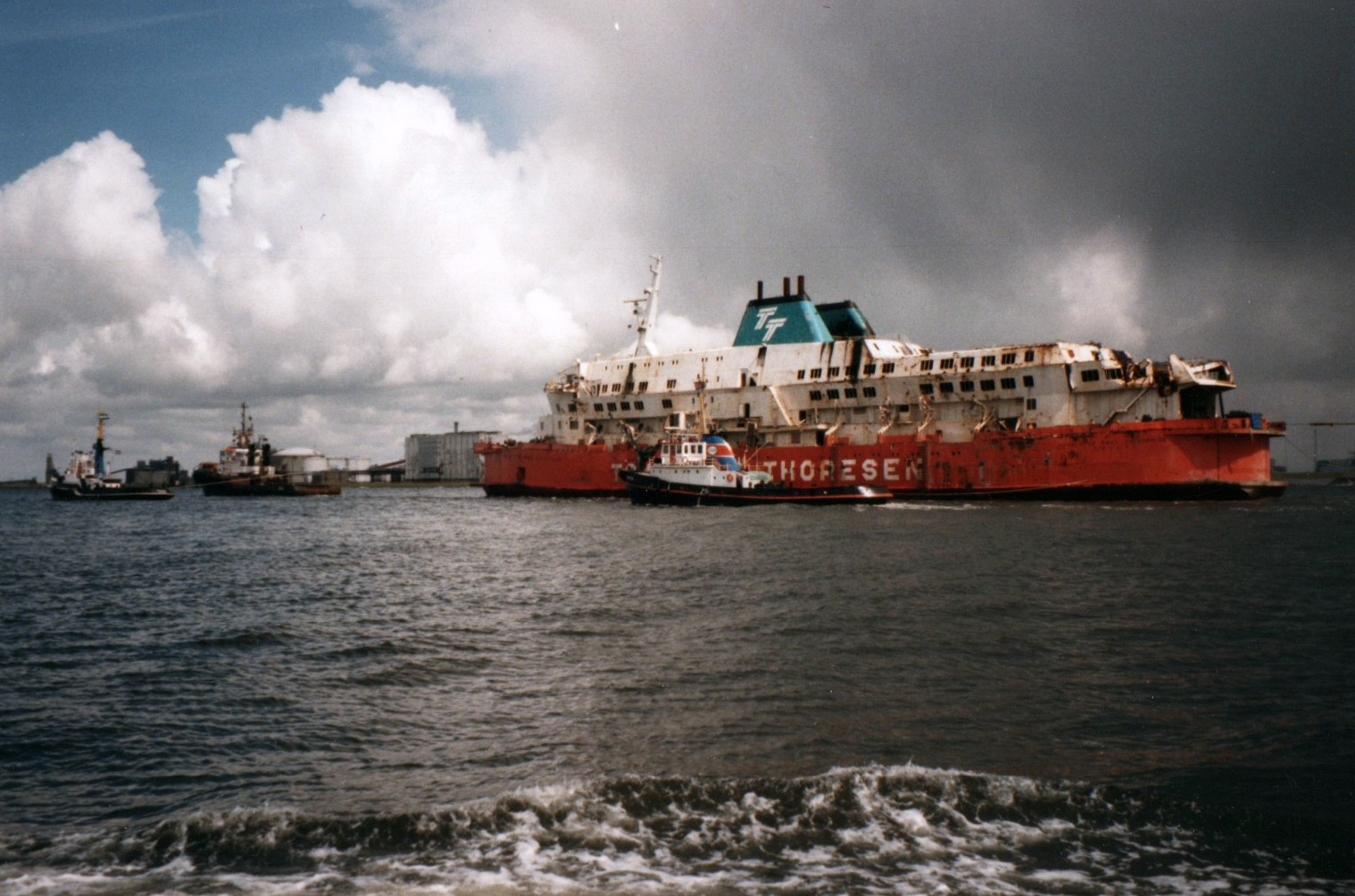
The official inquiry found failures aboard the ferry and throughout the company’s management. The disaster could not be explained adequately by stopping at the crew member who had been asleep when the doors should have been closed.
The bridge had no indicator lights showing whether those doors were secured. Captains had requested such indicators before the disaster. Those requests had not produced the protection the ship needed.
These findings make the calm weather more disturbing. The danger had been allowed aboard before the ferry reached the open sea.
The rescue deserves remembrance. So does the responsibility to make such heroism unnecessary.
The Names That Remained
The final death toll was 193 passengers and crew.
For those who survived, the event did not end when the water released them. Nor could a casualty total describe what the bereaved had lost. Each number stood for a person whose absence would reach far beyond the harbour.
In Dover, remembrance has continued across the decades. At the 2023 ceremony, the names of those lost were read aloud. People observed silence and cast flowers into the sea.
Names take longer than a number. That is part of the reason to say them.
The story of Herald of Free Enterprise contains failures, grief and lives cut short. It also contains people who reached towards somebody else when their own safety was uncertain.
Some returned to their families. Others never did.
Both belong in the story.
For another rescue shaped by a dangerously listing ship, read Andrea Doria: Eleven Hours Before the Sea Took Her.
If this story moved you, share it with someone interested in maritime history. Subscribe to Dark Stories to receive new stories by email.
Sources
MAIB: official report and final death toll; Associated Press, 21 May 1987: Parker’s inquiry evidence; The London Gazette: gallantry awards, 31 December 1987; Reuters, 30 December 1987: gallantry awards and Michael Skippen; Nick Metcalfe: accounts supplied by rescue divers Fullen and Couwenbergh; Nautilus International: the 2023 remembrance ceremony.


Leave a Reply