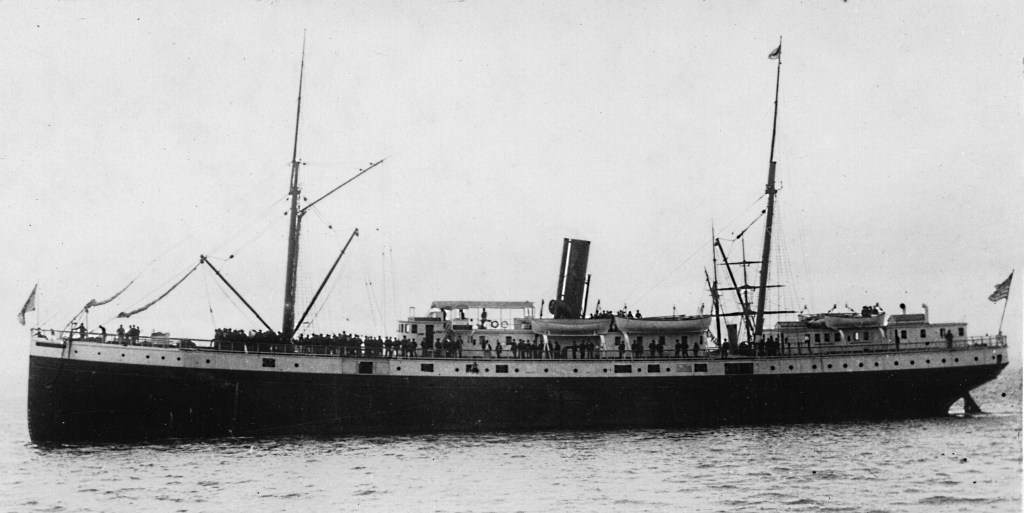
Dorothy was four. Her little brother Frankie was two. Their father, Frank, was taking the family north to a new life in Seattle. When he finally reached the shore, his wife and both children were gone.
Frank was an educator, moving from California to become an assistant superintendent of schools. The voyage aboard SS Valencia should have carried his household towards a promising job. Instead, it left him searching the rocks for the people who had boarded with him.
A coast in the wrong place
Late on 22 January 1906, Valencia missed the entrance to the Strait of Juan de Fuca in poor visibility. She was bound from San Francisco for Victoria and Seattle. Instead of entering sheltered waters, she continued along the exposed coast of Vancouver Island.
Near midnight, the steamer struck a reef. Her hull was breached. Captain Oscar tried to beach her, and she became trapped close to shore: ocean breakers on one side, steep cliffs on the other. Land was visible. Reaching it alive was another matter.
The early evacuation unravelled in darkness and confusion. Lifeboats tipped while being lowered, spilled their occupants or were smashed in the surf. Getting off the ship did not mean escaping the wreck.
The family in the boat
Frank, his wife and their children left in one of those boats. According to accounts collected from survivors, a breaker overturned it. Dorothy disappeared. Another wave threw the boat against the reef and destroyed it.
Frank struggled out of the water at the foot of a cliff. His wife and son were lost too. He later described crawling along the water’s edge, looking for his family. He had survived the passage from ship to shore; none of the three people he was looking for had survived with him.
With eight other men, Frank eventually found a route up the bluff. They followed a communications wire through difficult country to a lineman’s hut. There, a telephone connection brought the outside world its first news of the disaster.
Help they could see
On Valencia, the ordeal continued into a second night. Waves tore away the ship around the people still aboard. They crowded onto the remaining upper deck or climbed into the rigging.
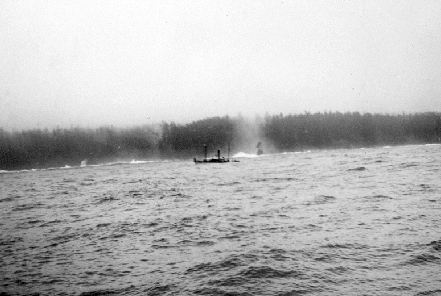
By Wednesday, rescue vessels were in the area. From the wreck, the waiting people could see ships offshore. But dangerous water and uncertain depths kept the larger vessels at a distance. The sight of help did not become a route to safety.
Some men escaped on rafts. Those remaining aboard were swept away as the wreck broke apart on 24 January. Parks Canada records 136 dead and 37 survivors. Every woman and child aboard was lost.
Could more have been saved?
That question drove the inquiries. The U.S. federal commission identified missed opportunities as well as severe physical obstacles. A line fired from the wreck had reached the cliff, but nobody was there to secure it for a rescue apparatus.
The commission thought the party already ashore might have reached that spot. It expressly refused to blame those men: they were injured, exhausted and struggling after a night without shelter. A possibility reconstructed afterwards was not an obvious choice to people fighting to stay alive.
The report also questioned the rescue ships’ response. It raised the possibility that small boats waiting outside the breakers could have picked up people swept seaward. That is a documented criticism, not proof that every attempted rescue would have succeeded.
The disaster helped bring new navigation aids, better rescue arrangements and improvements to the route that became the West Coast Trail. These changes protected later travellers. They could not restore Frank’s family.
A contemporary newspaper reported him still near the wreck afterwards, demanding answers about the rescue. His new post awaited him in Seattle. The household that was supposed to share that future never arrived.
Another disaster in which survival divided families: read SS Arctic: The Boy in His Father’s Arms and Empress of Ireland: Fourteen Minutes to Escape.
If this story stayed with you, share it—and remember the people behind the ship’s name.
Photographs and sources
Cover: SS Valencia, circa 1900, before her later refits. Unknown photographer; public-domain archival photograph via Wikimedia Commons. The smaller image shows the actual wreck on 23 January 1906, from BC Archives via Wikimedia Commons, listed as public domain. Both are historical photographs, not AI reconstructions.
Sources: Parks Canada: The Sinking of the S.S. Valencia; Daryl C. McClary, HistoryLink: Valencia, SS, the Wreck of (1906); U.S. Federal Commission, Report to the President (14 April 1906), especially pp. 22–24 and 43–44; HikeWCT, survivor accounts and contemporary newspaper extracts; The Morning Oregonian, 31 January 1906. Distances and some details differ between accounts; the rescue possibilities above are attributed to the inquiry.


Leave a Reply