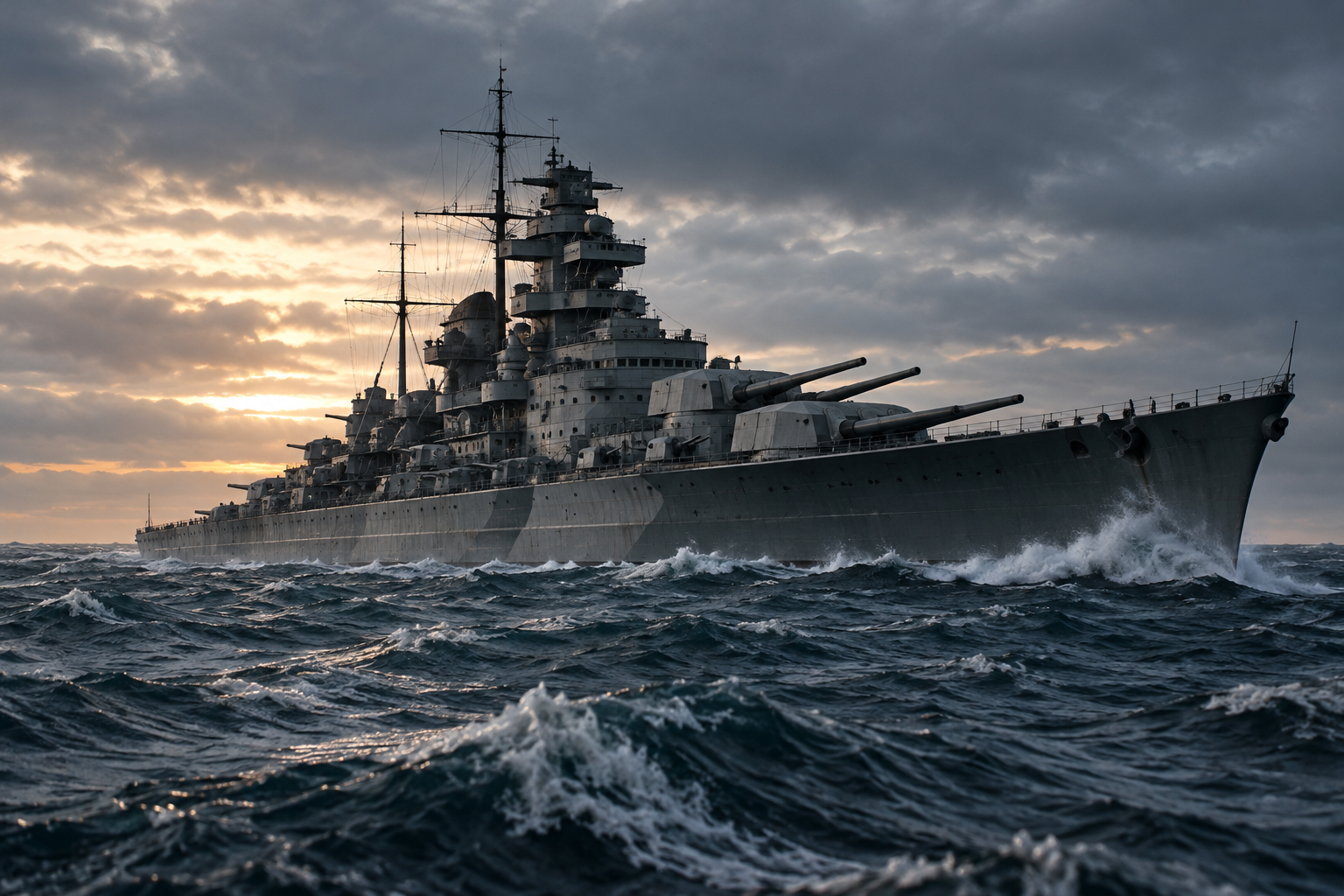
North Atlantic, 27 May 1941. A mighty battleship was dying. Hundreds of young men were about to discover that surviving the battle did not mean surviving the sea.
The ship that seemed invincible
When the German battleship Bismarck sailed into the Atlantic in May 1941, she was among the most powerful warships afloat. More than 2,200 men served aboard her. Many were barely out of their teens.
Their mission was to attack Britain’s vital Atlantic shipping routes. But within days, the hunters would become the hunted.
On 24 May, Bismarck encountered the British battlecruiser HMS Hood and the battleship HMS Prince of Wales. Around six o’clock, Hood suffered a catastrophic magazine explosion and sank within minutes. Of her crew, 1,415 died. Only three survived.
Britain demanded revenge.
A giant trapped at sea
Bismarck had also been damaged. Fuel was leaking, and her commander decided to seek refuge in occupied France. British warships and aircraft hunted her across the Atlantic.
On the evening of 26 May, a torpedo dropped by a Swordfish aircraft from HMS Ark Royal damaged Bismarck’s steering. The giant battleship could no longer hold her intended course. There would be no escape.
The final morning
At dawn on 27 May, HMS Rodney and HMS King George V opened fire. Shell after shell struck Bismarck. Gun turrets were destroyed. Fires spread. Smoke filled the passageways. Below decks, wounded sailors faced fire, flooding and twisted steel.
Eventually the ship was abandoned. Men climbed over the battered hull and jumped into the cold Atlantic. Behind them, the battleship capsized and disappeared.
The men in the water
Hundreds struggled among wreckage and oil. Some were wounded, others exhausted. British warships began pulling survivors aboard. For a moment, rescue seemed possible.
Then came a warning of a possible German submarine. The British ships broke off their rescue effort, fearing attack. Men still in the water watched their hope disappear over the horizon. A few were rescued later by German vessels. Most were never seen again.
Of more than 2,200 aboard Bismarck, only 116 survived.
Victory and tragedy
For Britain, Bismarck’s sinking was a major naval victory. For families in Germany, it meant devastating loss. Only three days earlier, British families had suffered the same terrible grief after the destruction of Hood.
The sailors had been enemies. But in the freezing Atlantic they shared the same fear, the same struggle to breathe, and the same hope of seeing home again.
The ocean did not distinguish between victors and defeated.
Explore more maritime tragedies on Dark Stories: Estonia, Jan Heweliusz and Herald of Free Enterprise. Follow Dark Stories for true stories of disaster, mystery and the people history sometimes forgets.


Leave a Reply