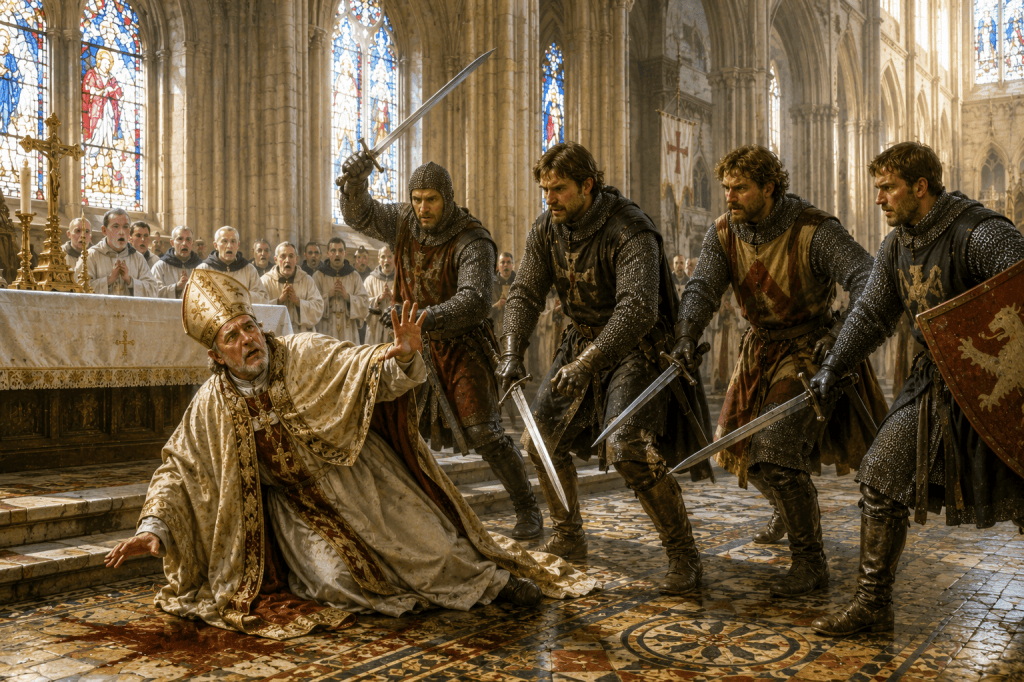
This article describes a real historical killing. The account is based on surviving medieval sources and modern historical research. AI-generated images are used for illustration and are not authentic depictions or evidence from the event.
On the evening of 29 December 1170, four armed knights entered Canterbury Cathedral.
They had come in the name of King Henry II.
Minutes later, Archbishop Thomas Becket lay dying on the stone floor while terrified monks fled through the church.
The killers did not hide their faces. They did not escape under cover of darkness. They believed they were defending their king.
But had Henry ordered the murder—or had four men turned an angry royal outburst into a death sentence?
The King’s Closest Friend
Thomas Becket was born around 1120, the son of a London merchant.
Intelligent, ambitious and socially gifted, he entered the household of Theobald, Archbishop of Canterbury. His abilities eventually brought him to the attention of the young King Henry II.
In 1155, Henry appointed Becket Chancellor of England.
The two men became close companions. They travelled, hunted and entertained together, and Becket embraced the wealth and ceremony of the royal court.
Henry trusted him completely.
When the position of Archbishop of Canterbury became vacant, the king believed he had found the perfect candidate.
By placing his closest friend at the head of the English Church, Henry expected to gain a powerful ally.
Instead, he created his most determined opponent.
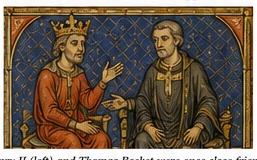
A Friendship Turns Bitter
Becket became Archbishop of Canterbury in 1162.
Soon afterwards, he resigned as Chancellor and adopted a more austere religious life. More importantly, he began defending the Church’s independence from royal authority.
The central dispute concerned who had the right to judge clergy accused of serious crimes.
Henry wanted accused churchmen tried in royal courts. Becket insisted that ecclesiastical courts had authority over them.
Their disagreement became increasingly personal.
In 1164, Becket was summoned before the king’s council and faced accusations concerning his conduct as Chancellor. Fearing imprisonment—or worse—he fled England and spent six years in exile in France.
Several attempts at reconciliation failed.
Finally, in 1170, an uneasy peace allowed Becket to return to Canterbury. The crowds welcomed him. But the conflict was not over.
The King’s Furious Words
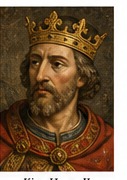
While Becket had been in exile, Henry arranged for his son to be crowned by the Archbishop of York and other bishops.
Becket considered this an attack on Canterbury’s traditional authority. After returning to England, he excommunicated several churchmen involved in the coronation.
The punished bishops travelled to Henry’s court in Normandy and complained.
The king exploded in anger.
The famous sentence often attributed to him—asking who would rid him of a troublesome priest—does not appear in that exact form until centuries later. Contemporary writers recorded several different versions of Henry’s outburst.
What seems clear is that Henry loudly condemned Becket before his court and complained that no one had avenged the insults against him.
Four knights heard the king’s rage: Reginald FitzUrse, William de Tracy, Hugh de Morville and Richard Brito.
Whether they believed they had received an order, or merely saw an opportunity to win royal favour, remains uncertain.
They left Normandy and travelled separately towards Canterbury.
The Knights Arrive
On 29 December, the knights entered the Archbishop’s Palace beside Canterbury Cathedral.
They left their swords outside and confronted Becket.
Their original intention may have been to arrest him and take him to the king. They demanded that he reverse the excommunications and answer for his actions.
Becket refused.
The argument grew heated. The knights accused him of betraying the king. Becket insisted that he had acted within his authority as archbishop.
They stormed out to collect their weapons.
Becket’s attendants understood the danger. They urged him to flee or barricade himself inside the palace. He would not.
As bells called the monks to the evening service, members of Becket’s household guided him through a passage into the cathedral.
The knights followed.
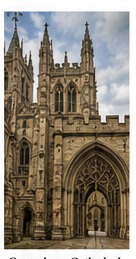
Murder in the Cathedral
The cathedral was dark except for candles and the last winter light entering through the windows.
Monks attempted to close the doors, but Becket reportedly ordered them left open. He would not turn a church into a fortress.
The armed men entered, demanding to know where Thomas Becket was.
The archbishop answered them openly.
They tried to drag him from the cathedral, perhaps intending to arrest or kill him outside. Becket resisted and held his position near a pillar and altar.
Edward Grim, a visiting cleric, remained beside him.
One knight raised his sword. Grim attempted to shield Becket and received a severe wound to his arm.
Further blows struck the archbishop. A sword hit the stone floor with such force that its tip broke.
Becket collapsed.
Within moments, the Archbishop of Canterbury was dead inside his own cathedral.
Five eyewitnesses later produced accounts of the killing. Their writings differ in details and strongly favour Becket, but they agree on the essential sequence: the knights confronted him, pursued him into the cathedral and struck him down while Grim tried to intervene.
Europe Reacts
News of the murder spread rapidly.
Killing an archbishop was shocking enough. Killing him inside a cathedral made the crime appear not merely political but sacrilegious.
People began visiting Becket’s tomb, and reports of miraculous healings soon circulated.
In February 1173—just over two years after the murder—Pope Alexander III declared Thomas Becket a saint.
Canterbury became one of Europe’s most important pilgrimage destinations. Images of Becket’s death appeared in manuscripts, churches, reliquaries and sculptures across the medieval world.
The murdered archbishop became a symbol of resistance to royal power.
Henry II could not escape suspicion.
There is no conclusive evidence that he explicitly ordered Becket’s death. Yet his anger had set the knights in motion, and many contemporaries held him morally responsible.
What Happened to the Killers?
Immediately after the murder, the four knights searched and looted the archbishop’s residence.
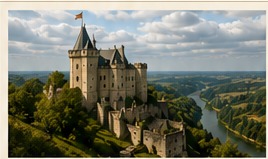
They later withdrew to Knaresborough Castle, where they remained for about a year.
Their punishment was surprisingly indirect.
They were eventually ordered to seek forgiveness from the pope and perform penance in the Holy Land. All four are believed to have died either in Jerusalem or during their journey.
One of them, William de Tracy, later issued a charter in Italy granting gifts to Canterbury’s monks and asking them to pray for his soul.
Henry’s own penance was more public.
In 1174, during a political crisis involving rebellion by his sons, the king travelled to Canterbury. He walked barefoot through the city, knelt at Becket’s tomb and submitted to punishment from the monks.
Soon afterwards, Henry’s forces won an important victory. Many people interpreted the success as proof that Saint Thomas had forgiven him.
A Question Without a Final Answer
Thomas Becket had begun as Henry II’s trusted servant and friend.
The king elevated him to the highest office in the English Church, expecting loyalty.
Instead, Becket chose the authority of his new position over obedience to the man who had placed him there.
Their struggle became so bitter that four knights crossed the sea believing violence would please the king.
Did Henry intend Becket to be killed? History cannot say for certain.
Perhaps the knights misunderstood an emotional outburst.
Perhaps they understood exactly what the king wanted but knew he could never issue the command openly.
Or perhaps ambition transformed royal anger into murder.
Whatever Henry intended, his words had consequences.
On a December evening in 1170, four men entered Canterbury Cathedral with swords.
They left behind a dead archbishop, a scandal that shook Europe and a mystery that history has never completely settled.
Sources
- British Museum: Who Killed Thomas Becket?
- British Museum: Thomas Becket: The Murder That Shook the Middle Ages
- British Museum: A Timeline of Thomas Becket’s Life and Legacy
- Canterbury Cathedral: Thomas Becket’s Martyrdom
- Canterbury Cathedral: Our Story
All images in this layout are AI-generated illustrations and are not authentic historical depictions or evidence.
 Dark Stories